
If you’re an Indian business, there’s one thing you can’t ignore right now—how you handle your customers’ personal data. Every day, you collect names, emails, phone numbers, purchase info, and more. But have you stopped to ask: Are we really protecting this data the way we should?
India’s long-awaited Digital Personal Data Protection (DPDP) Act has officially changed the game. It’s not just a topic for boardrooms or lawyers anymore—it’s real, and every business has a deadline looming large. By May 13, 2027, you need your processes airtight, your teams trained, and your customers’ data secured.
Why should you care? Besides the risk of penalties (we’re talking up to ₹250 crore per violation), customers are paying closer attention to how their data is treated. Earning and keeping their trust has never been more crucial.
In this guide, we’ll walk you through what the DPDP Act means for your business, why it matters, and an easy-to-follow compliance checklist. We’ve added ideas for three visual aids so you and your team can digest the information at a glance and take action, fast.
Why the DPDP Act Matters for Every Indian Business
Let’s get real: digital privacy wasn’t always clear-cut in India. The DPDP Act finally brings in sharp boundaries and firm rules for all companies collecting or processing data about Indian citizens—no matter your industry or size.
At its heart, the Act is about putting individuals (called Data Principals) back in control. It demands that businesses are transparent, responsible, and secure with the data they collect. You’ll need to have a clear legal reason for each piece of data you collect, get actual consent from users (not those sneaky, tiny tick boxes), and have the right systems to keep data safe from collection to deletion.
Don’t be tempted to push this off until 2027. Upgrading your technology, shifting your team’s habits, and aligning with the law takes real time. That’s why 2026 is the year to dig in and get it right.
Your DPDP Act Compliance Roadmap for 2026
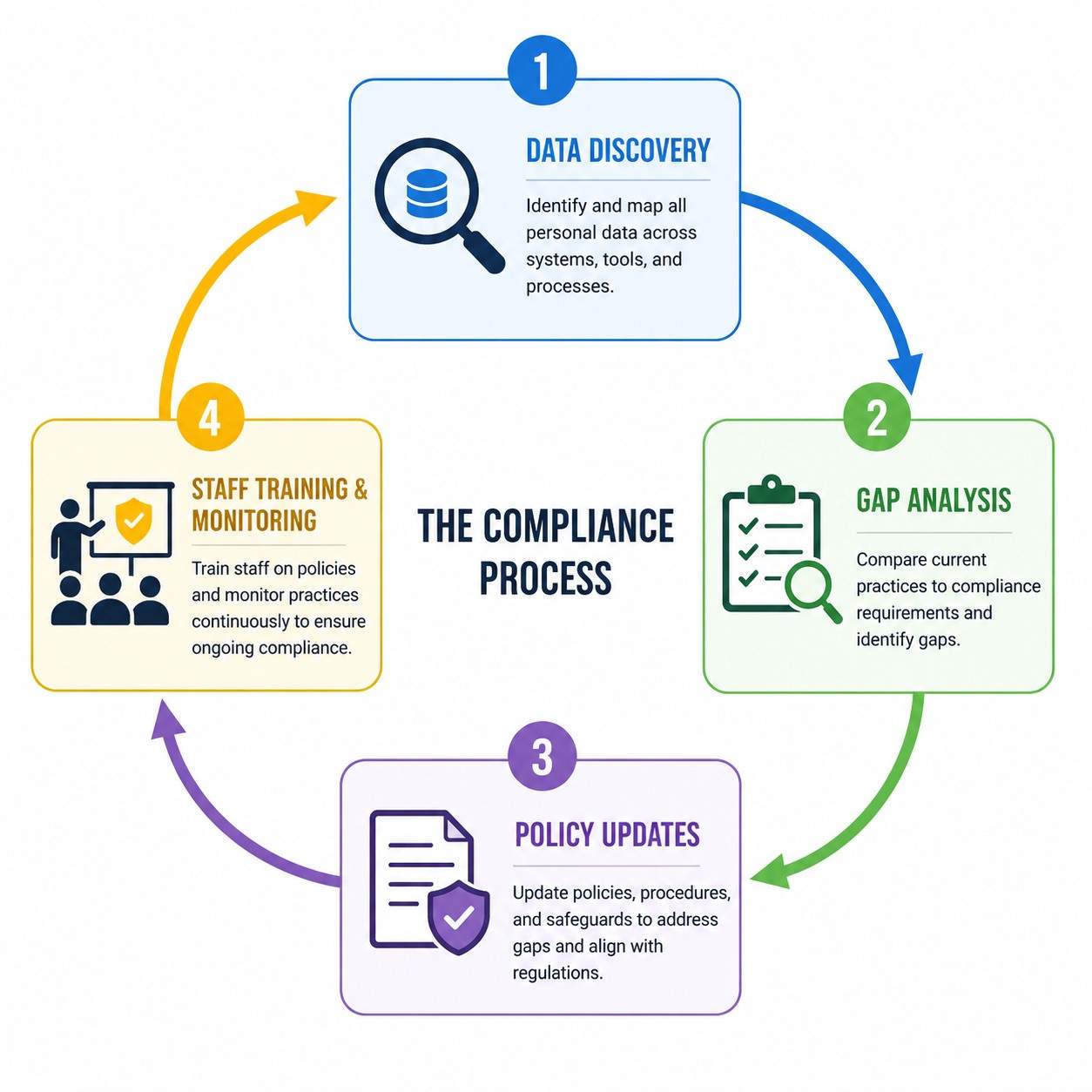
Getting compliant isn’t just ticking boxes. It’s a journey—know your data, uncover your weak spots, make changes, and train your people. Most importantly: no single team can do this alone. It takes IT, legal, marketing, operations—everyone pulling in the same direction, with leadership at the helm.
Here’s the big-picture flow:
- Map Your Data: What data do you collect? Where does it live? Who has access?
- Find Gaps: Compare your current practices to DPDP requirements.
- Make Changes: Update tech and rewrite policies where needed.
- Educate & Monitor: Train your staff and keep an eye out for issues.
Open communication is key. If leadership isn’t behind the project—or if teams aren’t sharing info—progress will be painfully slow.
The Ultimate DPDP Act Compliance Checklist 2026
Let’s break the big project into manageable steps your team can tackle together. Assign clear owners, set deadlines, and check things off as you go:
1. Governance and Leadership
Every ship needs a captain, especially for something as big as privacy.
- Appoint a Data Protection Officer (DPO): If your business handles a lot or particularly sensitive personal data, you’re likely required to have a DPO based in India. Even if not, having a go-to privacy lead keeps things running smoothly.
- Set Up a Privacy Committee: Bring together key voices from IT, legal, security, and marketing to oversee progress and tackle roadblocks quickly.
- Plan Your Budget: Set aside money now for cybersecurity tools, policy reviews, and staff training. These aren’t nice-to-haves—they’re musts.
2. Data Mapping and Inventory
You can only protect what you know about.
- Do a Data Audit: Trace every type of personal data you collect, from web forms to support tickets. Know where it’s stored and who can see it.
- Sort Your Data: Identify sensitive information (like financial or health details) and treat it with extra care.
- Practice Data Minimization: Only collect what you truly need. It’s time to clear out old or unnecessary info.
- Set Data Retention Rules: Decide how long to keep different types of data. Automate deletion when you don’t need it anymore.
3. Consent Management
Getting proper consent is non-negotiable.
- Refresh Privacy Notices: Rewrite them in clear, simple language—and in Indian languages your customers read.
- Use Consent Management Tools: Invest in software to clearly record when and how consent was given.
- Make Opt-Out Easy: Leaving should be just as simple as joining—build easy-to-use withdrawal options.
- Parental Consent: If your platform serves anyone under 18, verify age and make sure parental consent is ironclad.
4. Data Principal Rights
People can request, fix, or erase their data—and you need to handle these requests fast.
- Create a Request Portal: Don’t make users struggle to find you. Offer straightforward ways to ask for, change, or delete their data.
- Fix Mistakes Fast: Set up simple processes for correcting errors or deleting profiles.
- Have a Complaints Plan: Build a grievance redressal system. You’re required to respond within certain deadlines.
5. Breach Notification and Security
Security is everyone’s responsibility, not just your IT team’s.
- Tighten Access: Only give data access to employees who absolutely need it.
- Encrypt Everything: Whether it’s stored or in transit, make sure personal data is encrypted.
- Prep for the Worst: Build a step-by-step incident response plan for data breaches—even small ones.
- Notify the Right People: Know exactly who to inform (including the Data Protection Board and affected individuals) if something goes wrong.
6. Vendor Management
You’re responsible for your data—even if you send it to a third party.
- Check Your Vendors: Make a list of every tech tool, partner, or contractor who touches your data.
- Update Contracts: All third parties must be held to DPDP standards, no exceptions.
- Review Regularly: If a vendor isn’t up to scratch, find one who is.
How We Can Help
Let’s face it: meeting every DPDP Act requirement can feel overwhelming. But you don’t have to tackle it alone. we’re here to help you turn legal requirements into practical, secure business processes.
Our team will partner with your group to create a data map including an initial assessment of your entire data footprint so that we can identify opportunities where there are weaknesses and provide a plan for how to implement the appropriate solutions such as consent management solutions and secure network design.
Whether you are simply beginning the process of preparing for compliance or are completing your gap assessment, we will provide assistance throughout the entire process.
Meet DPDP Act Requirements Before May 2027
By May 13, 2027, you need your processes airtight, your teams trained, and your customers’ data secured.
Talk to CyberCube